Cooperation, first of all an industrial chair of six years, has been ongoing since December 2024 via a laboratory for five years of collaborative research.
Maritime transport, a pillar of global trade, is one of the most efficient modes of transport in terms of greenhouse gas (GHG) emissions per year per tonne and per kilometer (gCO2/tonne/km). However, its rapid growth raises critical environmental challenges. The International Maritime Organization (IMO) has committed to reducing the sector's CO2 emissions by 50% by 2050.
This transition involves:
– optimising the energy efficiency of engines and ships
– the development of caron-free alternative fuels
– the integration of new technologies, both hybrid and electric.
It is with this in mind that MAN ES France and Centrale Nantes continue their efforts dedicated to technological innovation and applied research.
This new multidisciplinary angle makes it possible to combine complementary expertise to meet complex challenges, from improving engine efficiency to predictive maintenance of systems.
Review of the Industrial Chair (2018-2024)
For six years, the Chair has mobilized human, financial and technical resources with 8 full-time equivalents, including 4 PhD students, and a total budget of €5 million, shared between MAN Energy Solutions (€3 million) and Centrale Nantes (€2 million). The research focused on three main areas:
1. fundamental studies of engine phenomena: fuel injection, combustion, heat transfers, supercharging, etc.
2. Engine-environment interaction: optimization of propulsion systems and electrical installations, in particular via hybridisation.
3. Alternative fuels: exploring the performance of carbon-free fuels for the energy transition.
This work has led to the development of innovative components and strategies integrated into complex systems.
A transition to a multidisciplinary model
"The previous chair, entitled Research Chair in Industrial Engine for Marine and Stationary Applications, which ended in 2024, led to significant progress, including the development of a test bench for injection systems, installed at Centrale Nantes. This bench has played a key role in the optimization of MAN's electronic fuel injection systems, which are now available to customers" explains Yoann Thévenoux, Head of Calculation at MAN ES France and technical referent within the framework of the joint laboratory. The current partnership, signed for five years, broadens the field of research. Unlike the phase which involved a single team of researchers, three laboratories at Centrale Nantes are now mobilized:
– engine performance: in charge of optimising engine performance and injection circuits.
– materials: focused on metal additive manufacturing
– digital sciences: dedicated to system control and time monitoring real
"This new multidisciplinary angle makes it possible to combine complementary expertise to meet complex challenges, from improving engine efficiency to predictive maintenance of systems," explains Vivien Leroy, Engine Performance Calculation Engineer at MAN ES France, and technical referent of the joint laboratory alongside Yoann Thévenoux. The Joint Laboratory is based on a structured and efficient organization. On the Nantes side, four engineers, supported by one to two technicians, carry out research work in the short and medium term. To deepen the more theoretical aspects, two doctoral students will strengthen the team. All the work is supervised by three teacher-researchers, whose cumulative involvement represents about a full-time equivalent.
On the Saint-Nazaire side, four to five employees are involved, mainly for the monitoring of the work, regular exchanges with the research teams and the progress workshops. Although these contributions do not represent full-time contributions, they reflect close collaboration, facilitated by geographical proximity.
Concrete deliverables to support decarbonisation
The objectives of the joint laboratory are in line with the results obtained with the industrial chair, but with a broader ambition. Expected results include: – the development of advanced simulation models to improve the engine performance. – projects on metal additive manufacturing, with a thesis planned on this subject. – innovations in system control and monitoring, for real-time monitoring of equipment. Ultimately, these advances will contribute to strengthening MAN's competitiveness by offering solutions that are both more efficient and more sustainable. Relying on PhD students, academic experts and engineers This joint laboratory embodies an exemplary synergy between the world's and industry. If the old pulpit made it possible to lay solid foundations, this new format paves the way for a more ambitious and transversal collaboration. The joint laboratory between MAN and Centrale Nantes is thus affirmed as a strategic lever to meet the technological and environmental challenges of the industrial engine sector.
Explore more topics
-
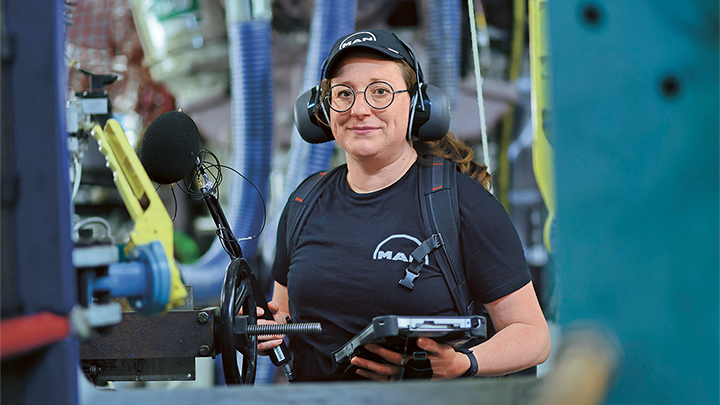
Yes women can also be successful in technical professions
Julie Lepré is in charge of the Engine Testing and Validation laboratory at MAN ES France at the Saint-Nazaire site. She tells us about her job as a Physical Measurement Technician. A so-called "technical" profession in which Julie shows us that she has found her place:
-
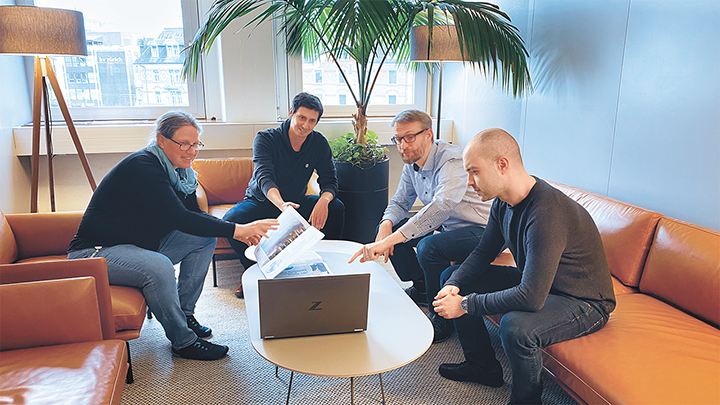
Think new. Act new. Go Transform!
MAN ES in Zurich is experimenting with new forms of working. Can other sites benefit from the lessons learned?
-
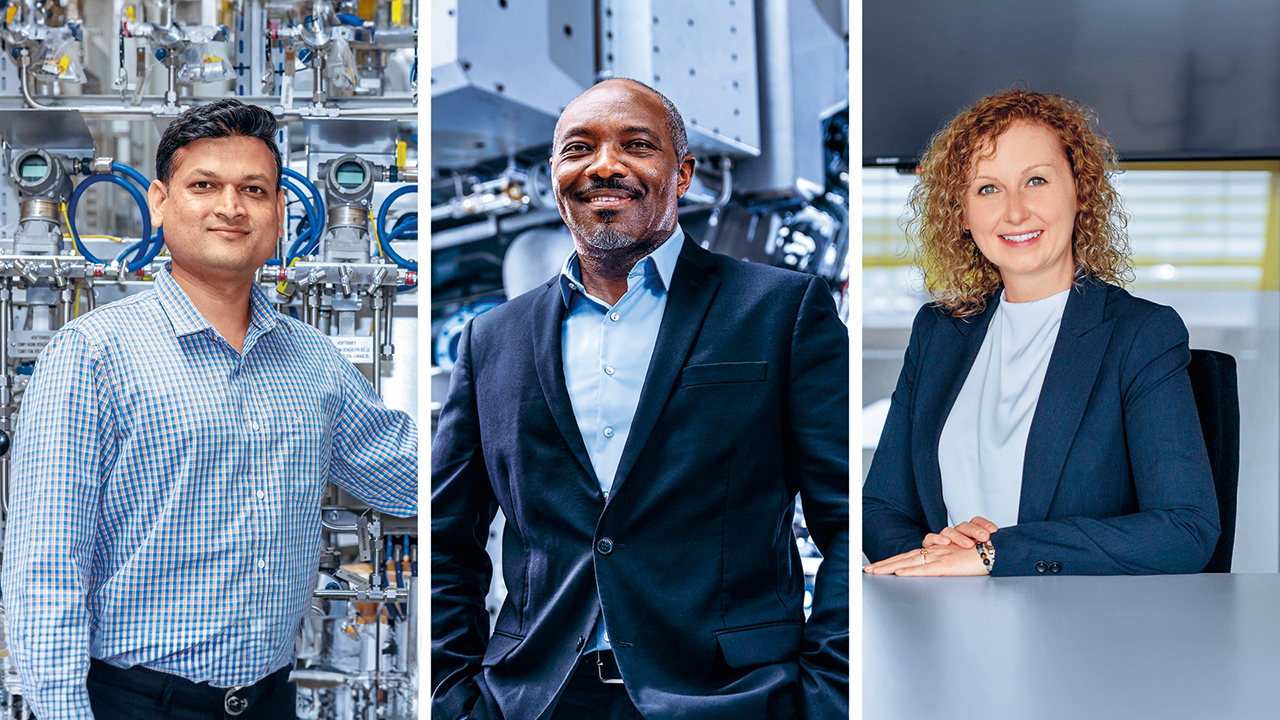
A diverse and colorful workforce sharpens awareness of other cultures
MAN Energy Solutions is the professional home of people from many different nations. Three of them talk about their experiences in our company.
-
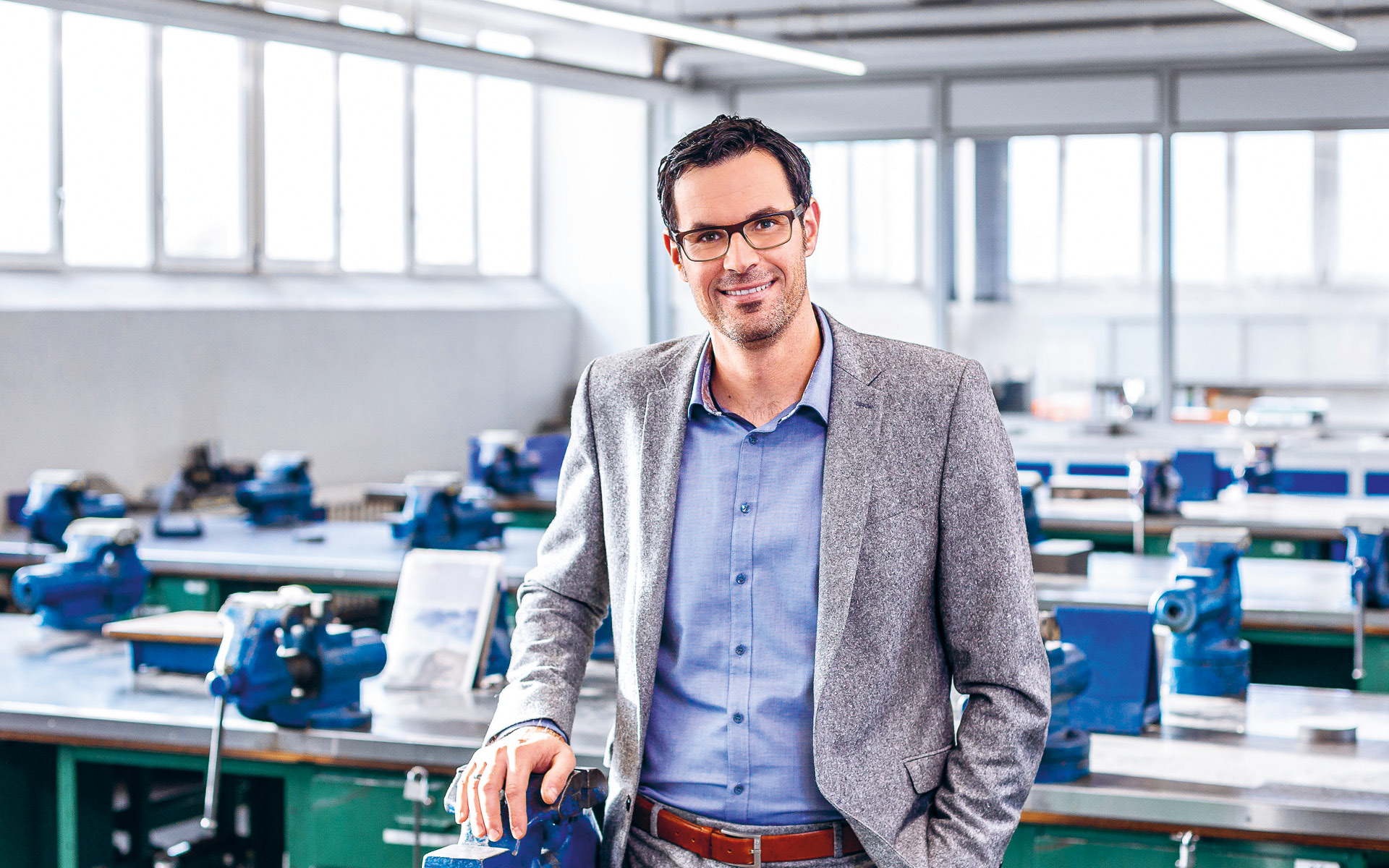
It is always worth doing an apprenticeship at MAN ES
Jörg Widemann, Head of Training Center Augsburg, talks about requirements and opportunities for apprentices at MAN ES.